




 New & Trending
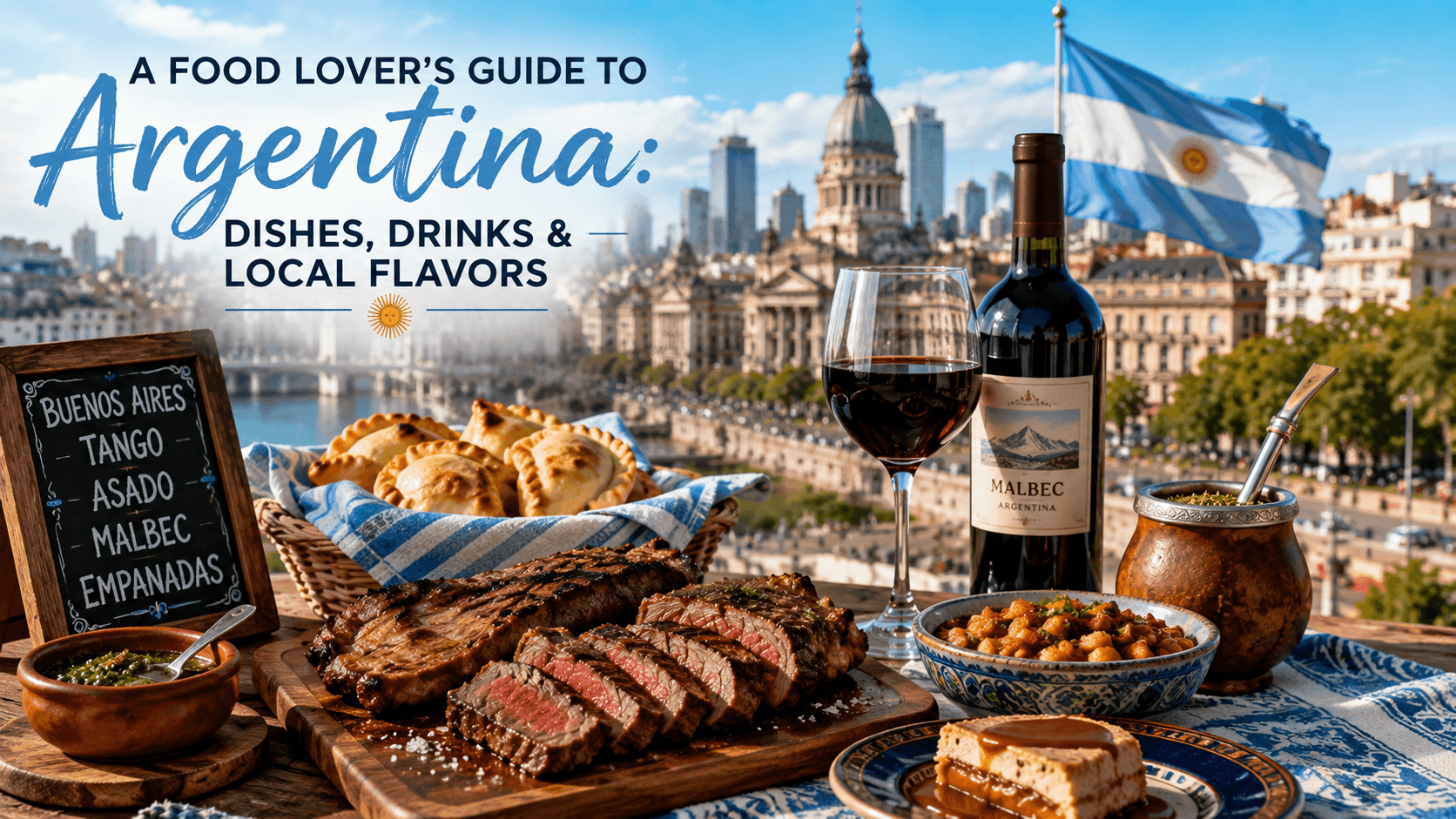
A Food Lover’s Guide to Argentina: Dishes, Drinks & Local Flavors
Argentina is world-renowned for its legendary meat consumption. Locals consume nearly fifty kilograms of beef per person every year. This guide serves as A Food Lover’s Guide to Argentina: Dishes, Drinks & Local Flavors, showing how food connects people here.
Waves of Italian and Spanish immigrants arrived over a century ago, reshaping the local kitchens. They blended Mediterranean traditions with South American ingredients to create something entirely new. Travelers will discover far more than simple open-fire barbecues.
The Cultural Heart of Argentine Cuisine
Eating in this country is a shared social contract, not a chore. Long meals keep families together and bring friends around the same table. It helps to follow A Food Lover’s Guide to Argentina: Dishes, Drinks & Local Flavors to make sense of these local customs.
Every province feeds into the culinary identity of the nation. The flat grasslands of the Pampas offer prime pasture, while the icy south provides fresh seafood. Every region tells a different story through its local dishes.
The Art of the Argentine Asado
An asado is not a simple backyard barbecue. It is an art form governed by unwritten laws of heat, smoke, and timing. Master grillers nurse slow-burning wood fires for hours to get the embers exactly right.
Every cut of meat has its own purpose, texture, and cooking speed. This attention to detail is a central theme in A Food Lover’s Guide to Argentina: Dishes, Drinks & Local Flavors.
| Cut Name | Description | Key Characteristics |
|---|---|---|
| Bife de lomo | Tenderloin | Lean, tender, and subtle in flavor. |
| Ojo de bife | Ribeye | Marbled with fat for maximum flavor. |
| Tira de asado | Short ribs | Short ribs cut across the bone for classic flavor. |
| Vacio | Flap steak | Flap steak that stays tender when grilled slowly. |
Garlicky chimichurri made with dried oregano, parsley, vinegar, and oil sits on every table. Diners also splash salsa criolla, a relish of diced onions, bell peppers, and tomatoes, over their meat.
Beyond Beef: Empanadas and Milanesas
Baked or fried turnovers known as empanadas are the ultimate street food here. These pastry pockets hold seasoned fillings and make the perfect midday snack. They often kick off a long dinner party.
Fillings and folding styles change as you travel across provincial borders. Keeping track of these differences is a main highlight of A Food Lover’s Guide to Argentina: Dishes, Drinks & Local Flavors.
- Salta style: Compact, oven-baked pockets stuffed with cubed beef, potato, and hard-boiled egg.
- Tucuman style: Oven-baked turnovers featuring hand-sliced beef and fresh green scallions.
- Mendoza style: Baked pastries flavored with cumin, green olives, and a hint of sweet onion.
Milanesas show how deeply Italian immigration altered the local palate. These thin, breaded cutlets of beef or chicken are a staple in every home. The Napolitana version goes further by adding tomato sauce, ham, and gooey melted cheese.
Sweet Indulgences: Dulce de Leche and Alfajores
Local desserts depend heavily on dulce de leche, a thick caramel made from sweetened milk. It is prepared by boiling milk and sugar slowly until it turns golden brown. People spread it on toast, drizzle it over crepes, and bake it into cakes.
Alfajores are the most beloved sweet treats in the country. These soft sandwich cookies hold a thick layer of milk caramel between two crumbly biscuits. Locals eat them at any hour alongside coffee.
Some are dipped in dark chocolate, others are rolled in grated coconut or dusted with sugar. Neighborhood bakeries compete to bake the finest version in town. Finding your favorite brand is a highlight of A Food Lover’s Guide to Argentina: Dishes, Drinks & Local Flavors.
Essential Beverages: Malbec and Yerba Mate
Any discussion of local drinks must focus on Malbec wine. Vineyards high up in the Andes slopes of Mendoza grow outstanding grapes. The hot sun and cold mountain nights give these wines deep fruit notes.
These deep red wines match the marbled cuts of a traditional steakhouse meal. Natural acidity and structured tannins slice through the rich fats of the beef.
Yerba mate is the social heartbeat of daily life. Locals drink this bitter herbal infusion from a hollowed gourd using a metal straw. It provides a steady energy boost without the jitters of coffee.
Passing the gourd around is a sign of friendship and warmth. This shared drink is a core focus in A Food Lover’s Guide to Argentina: Dishes, Drinks & Local Flavors.
Regional Gastronomy Across the Provinces
Patagonia serves wilder flavors shaped by cold winds and rugged landscapes. Slow-roasted mountain lamb cooked over open pits is a famous delicacy here. The sheep feed on wild mountain shrubs, giving the meat a unique flavor.
The northern provinces rely on ancient Andean cooking styles. Their dishes feature native corn, squash, and spices that set them apart from the beef-centric center. These mountain flavors add variety to A Food Lover’s Guide to Argentina: Dishes, Drinks & Local Flavors.
- Locro: A thick winter stew packed with white corn, squash, white beans, pork, and spiced sausage.
- Humita: Grated sweet corn mixed with sautéed onions and cheese, steamed inside corn husks.
- Centolla: Southern king crab pulled directly from the cold ocean waters of Ushuaia.
These extreme northern and southern regional dishes show the true range of local food. The country offers much more than simple steaks.
Navigating the Argentine Dining Culture
Local dining hours surprise many visitors. Restaurants rarely open their doors for dinner before nine in the evening. Most tables do not fill up until well past ten.
An afternoon snack called merienda keeps hunger away until late at night. Locals visit cafes for coffee and sweet, curved pastries called medialunas. It is a quiet hour of the day spent chatting with friends.
Adapting to these meal times makes for a much smoother trip. It lets travelers dine alongside locals and enjoy the lively evening atmosphere.
Conclusion
Eating here means joining a long-standing cultural tradition. Sharing warm mate with locals and lingering over an open fire define the local way of life. These experiences are at the heart of A Food Lover’s Guide to Argentina: Dishes, Drinks & Local Flavors.


Comments are closed